Progress MartechNEXT Recap, London: AI Agents, Answer Engines and What They Mean for Colleges

Insights / Events
Event Event recap, London · 7 min read
Progress MartechNEXT Recap, London: AI Agents, Answer Engines and What They Mean for Colleges
What we heard at Abbey Road Studios, and what it means for college websites: AI agents researching on behalf of applicants, search without the click, and where Progress Sitefinity is heading next.

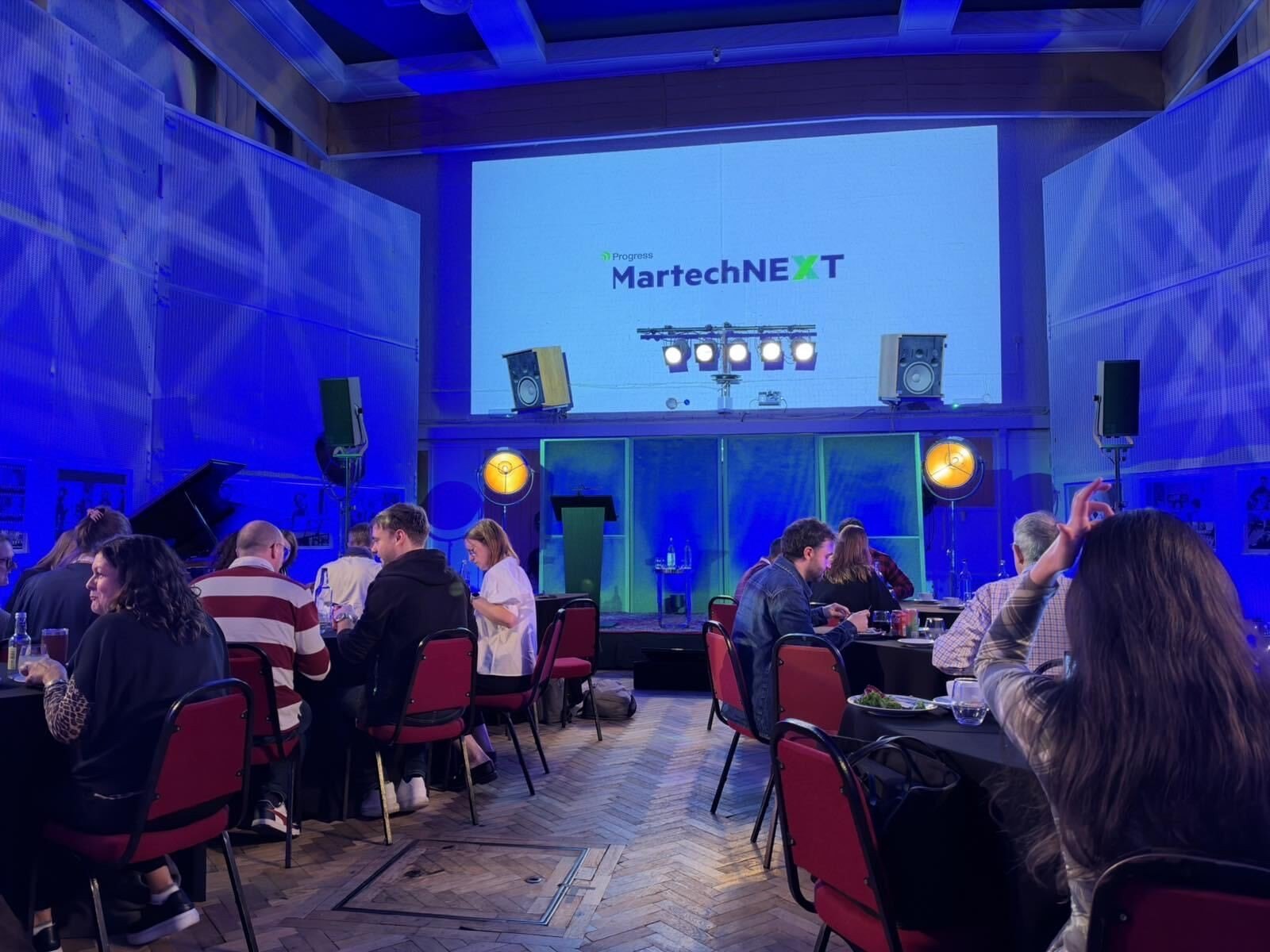
Progress MartechNEXT 2026 at Abbey Road Studios, London, 27 October 2026.
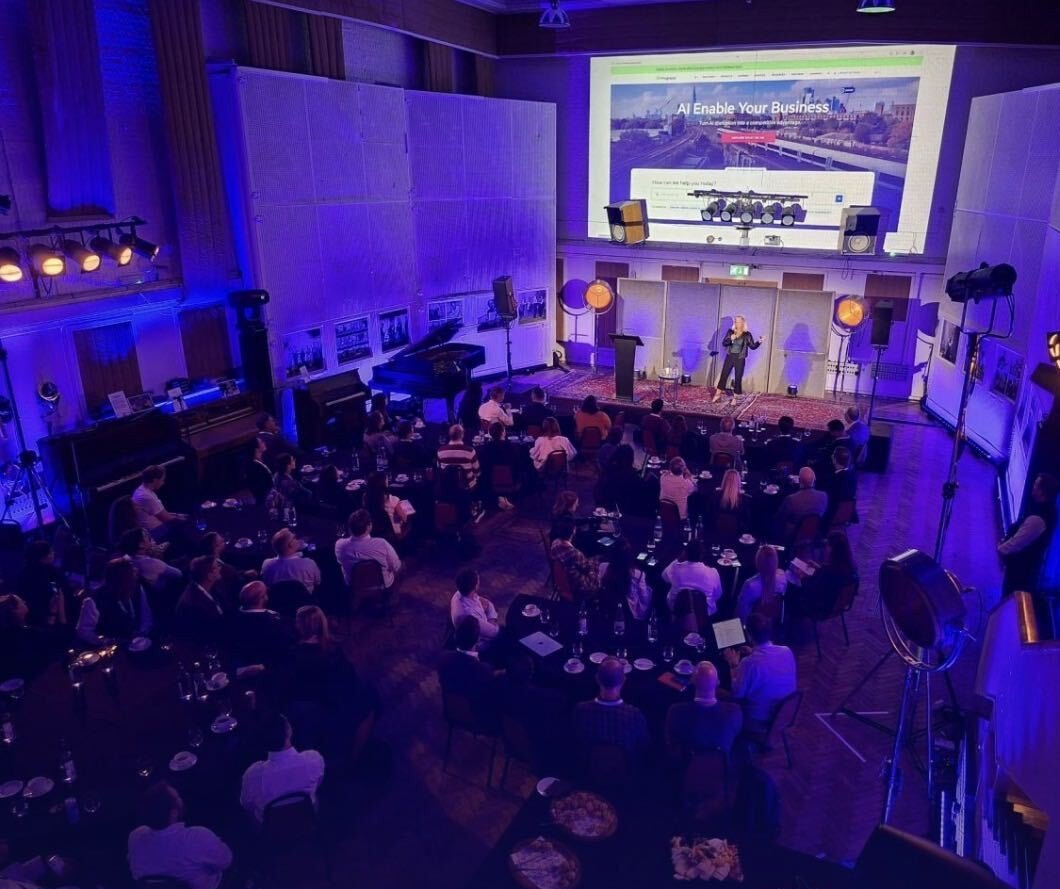
On 27 October the Inneall team spent the day at Abbey Road Studios in London for Progress MartechNEXT 2026, the London finale of the MartechNEXT world tour. Progress, its partners and martech analysts Scott Brinker and Frans Riemersma spent the day on one question: what happens to marketing and digital experience when AI starts doing the searching, comparing and deciding.
It was a fitting venue. Abbey Road opened in 1931 as the world’s first purpose-built recording studio and has always been a place for experimenting with technology in music, from some of the first stereo recordings to artificial double tracking. A room with that history was a good place to ask what AI will do to marketing.
AI dominated the agenda, as expected. What made the day useful was how practical it was. These are the ideas we think matter most for the colleges and organisations we work with, and what we are doing about them.
Key takeaways
AI agents will research on your customers’ behalf, shortlisting courses before anyone visits your site.
Context is the competitive advantage. AI is only as good as the systems it can safely draw on.
Websites are becoming dynamic, with pages built around what the visitor asks.
Being recognised by AI is not the same as being recommended by it.
The best automation keeps people in the loop for the judgement calls.
Small tools are now worth building, as long as they fit together.
Three kinds of AI agent
Scott Brinker, editor of chiefmartec, framed AI agents in marketing as three distinct types: agents that work for marketers, agents that serve customers, and agents that act on behalf of customers.
The first two are familiar: assistants that draft content and analyse campaigns, and chat assistants on a website. The third is the one we kept coming back to. When a prospective student asks an AI assistant to find part-time business courses in Dublin that start in January and cost under a certain amount, the agent does the research, compares the options and comes back with a shortlist. The college may never see the visit that led to the decision.
Context is the competitive advantage
Brinker and Frans Riemersma of MartechTribe made the case that the language model is only one part of the picture. AI becomes most useful when it can draw on three kinds of knowledge at once: what you know about the customer, what you know about your own business, and the systems and processes that hold the real data. Where those three overlap is what they called the golden context.
For a college, that means student records, Moodle activity, attendance, assessments and CRM data, connected with the right permissions. A question like the one below cannot be answered by a generic chatbot. It needs connected systems, the college’s own rules and context it can trust.
“Which first-year students are showing signs of disengagement, what is contributing to it, and what support is available under the college’s policies?”
None of this replaces the platforms colleges already run. Brinker and Riemersma were clear that CRM, CMS and student information systems are not going away: they hold the trusted data and run the essential processes. What AI changes is how people reach them. Connecting them safely is integration work, and it is where we spend most of our time.
The website matters more, not less
It would be easy to conclude that websites matter less in an agent-led world. The view in the room was the opposite. The website remains the foundation of an organisation’s digital presence and the one source of trusted information about its programmes, services and expertise. Agents need something reliable to read.
For a college, that changes the brief for course pages:
- Accurate: fees, start dates, entry requirements and delivery modes that match what admissions will actually tell an applicant.
- Structured: course data that machines can read, not only paragraphs written for people.
- Current: no last year’s fees or a closed intake still showing as open.
- Connected: course information drawn from the systems that hold the real data, rather than retyped by hand.
- Still built for people: when an applicant does visit, the experience has to earn their trust and make it easy to apply.
Search without the click
Theresa Williams and Natalka Antoniuk of Appius took on the realities of SEO and GEO (generative engine optimisation). Their headline message was that good SEO is good GEO. GEO is not a separate discipline: clear structure, accessible information, useful content and credible authority still do the work, and they were sceptical of AI shortcuts sold as guaranteed fixes.
Authority has to be real. Genuine case studies, verifiable expertise and legitimate third-party references build it. Fake awards and invented testimonials undermine it.
Google’s AI Overviews add another twist. A college can rank well and still be missing from the AI summary at the top of the results, and an applicant may get their answer without clicking through at all. Much of that lost traffic was never going to become an application anyway, so the answer is to measure what really matters: enquiries and applications, not just sessions.
Recognised is not the same as recommended
Scott Snowden of Flywheel Strategic gave an example from an international law firm that makes the point well. Ask an AI assistant about the firm by name and it describes it positively. Ask it for the five best firms for that service and the firm is nowhere to be seen.
Described accurately and positively
Not mentioned at all
Most organisations only ever test the first question. The second is the one an applicant’s AI assistant is asking.
Where Sitefinity is heading
Sara Faatz, Senior Director, Community and Awareness at Progress, opened the day with the demonstration we found most relevant as a Sitefinity partner: Dynamically Generated Experiences. Instead of clicking through menus and filters, a visitor describes what they want in plain language. Sitefinity interprets the request, retrieves the relevant content and assembles a page around it.
The important part is that this goes beyond better search results. The structure of the page itself adapts to what the visitor asked for.
What are you looking for?
I’m looking for a part-time business course in Dublin that I can do while working full-time. What would suit me, and what are the fees and entry requirements?
An illustration of an intent-based course search, not a screenshot of the live demonstration.
For a college, the applicant’s question becomes the page: the right programmes, schedules, fees and next steps, without working through a dozen course pages.
Human in the loop
Scott Snowden also showed Flywheel’s Sitefinity work for Tourism Barrie, a destination marketing organisation in Ontario. The example that stood out was operational. Responding to Google reviews had grown to roughly a full-time person’s workload. Now AI retrieves each review, analyses it and drafts a reply. Staff approve the routine replies quickly, and anything sensitive or complex is passed to a person.
The pattern travels well. Colleges carry the same kind of workload in enquiries, support tickets, student feedback and application follow-ups. Find a measurable manual task, automate the repetitive part, keep people on the exceptions and measure the result. It is the same pattern we use for our own service desk.
Build what you need
Brinker and Riemersma put the martech landscape at around 15,000 commercial products, and argued that AI changes the economics underneath it. Small applications for a single department, a narrow process or a one-off integration, which could never justify a development budget before, are now worth building. The people closest to a problem often understand best how to solve it, and they can now build the tool themselves.
That raises the question of coherence. If a tool can be built in an afternoon, how does everything stay connected? Without shared architecture, fast-built tools mean fragmented data, conflicting rules and security gaps. That is why every agent we build has its own login, named tools, limited permissions and a person approving changes. It is what turns a clever prototype into something a college can trust with real data.
The day in pictures


What we are bringing back to our clients
Events are only useful if something changes afterwards. These are the five things we will be raising with the colleges and organisations we work with over the coming months.
Check what AI says about you
Ask the main AI assistants the shortlist questions your applicants ask, as well as questions about you by name, and repeat it over time. Then judge the results on enquiries and applications, not traffic.
Make course data a single source of truth
Fees, dates and entry requirements should come from one place and be marked up so machines can read them, not retyped across pages and brochures.
Get your Sitefinity site ready for what is coming
Review your version, hosting and content model so you can adopt AI search and dynamically generated experiences as they become available.
Connect the context
Map where student, course and CRM data lives, and how an agent could reach it safely, inside the permissions you already have.
Automate one routine workload
Pick a measurable manual task, let AI handle the routine cases and keep a person on the exceptions.
What to do next
If you want to know how your college shows up in AI answers, and how ready your Sitefinity site is for what Progress is building next, ask us about an AI visibility review.
Book an AI visibility review
How AI assistants describe you, whether they recommend you, and what to fix first.
Keep reading
Related insights.
Progress Sitefinity Partner Roundtable Recap, Barcelona: Platform Trends and What They Mean for Clients
What Progress Sitefinity partners discussed in Barcelona, and what it means for clients.
Read →Key Digital Themes from HEAnet 2025 and What They Mean for Higher Education
What HEAnet 2025 signalled for Irish higher education, and how colleges can act on it.
Read →This website was rebuilt by an AI agent
How an AI agent rebuilt inneall.ie through a Sitefinity connector we wrote, with a person approving every step.
Read →Talk to us
Find out whether AI recommends you, or just recognises you.
We are happy to start with a short call and no sales deck.