A lecture tomorrow
At 10:00, from the timetable.
Home / Solutions / AI for higher education
Assistants connected to the student record, Moodle, CRM and service desk, within the permissions each user already has.
Within each user’s permissionsEvery action loggedYour systems of record
The problem with chatbots
It cannot say when their next class is, or whether yesterday’s request has been picked up, because it has no governed way to reach the systems that know.
Who it is for
The SIS, VLE, CRM and service desk stay the systems of record.
In practice
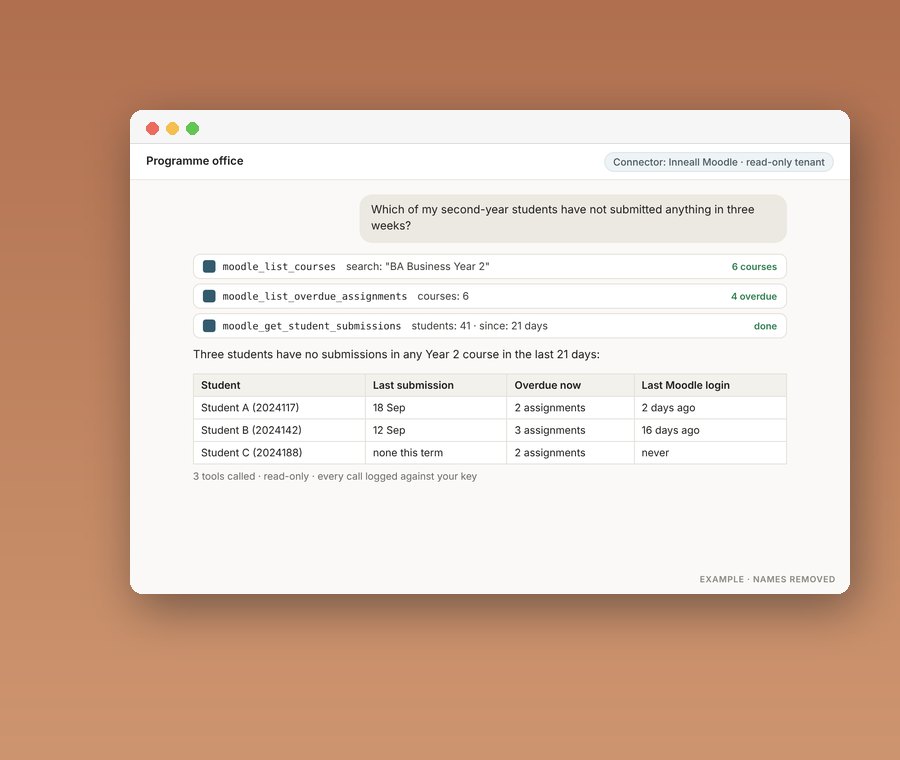
A student asks what they need to do this week. The same model works for academics and support staff.
At 10:00, from the timetable.
On Friday, from Moodle.
In Moodle.
The programme office is waiting for it.
What we have learned running it ourselves
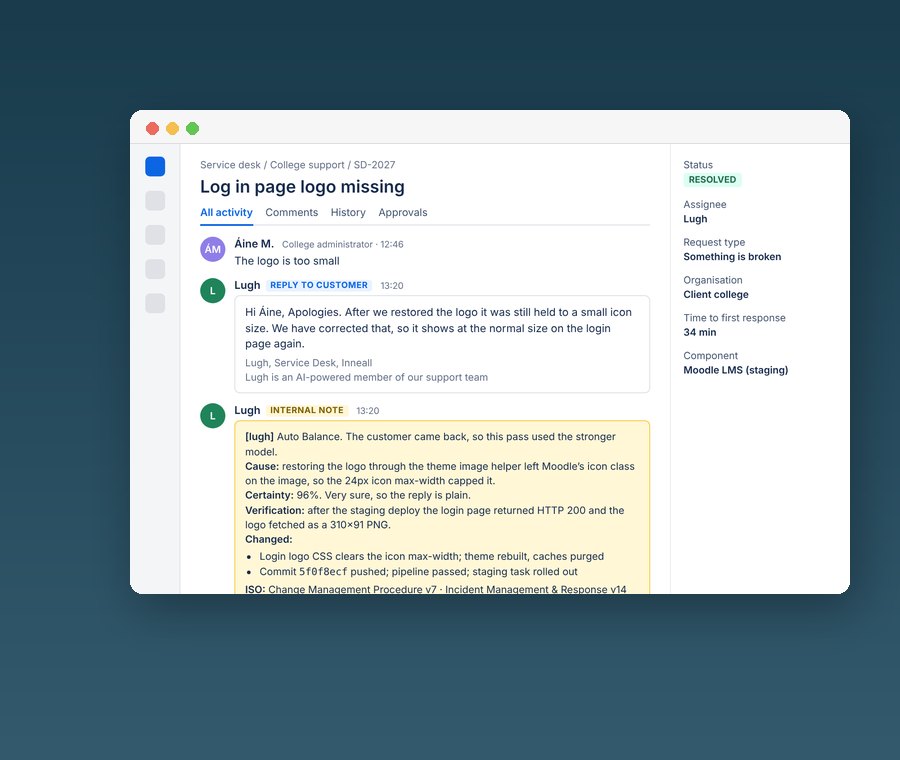
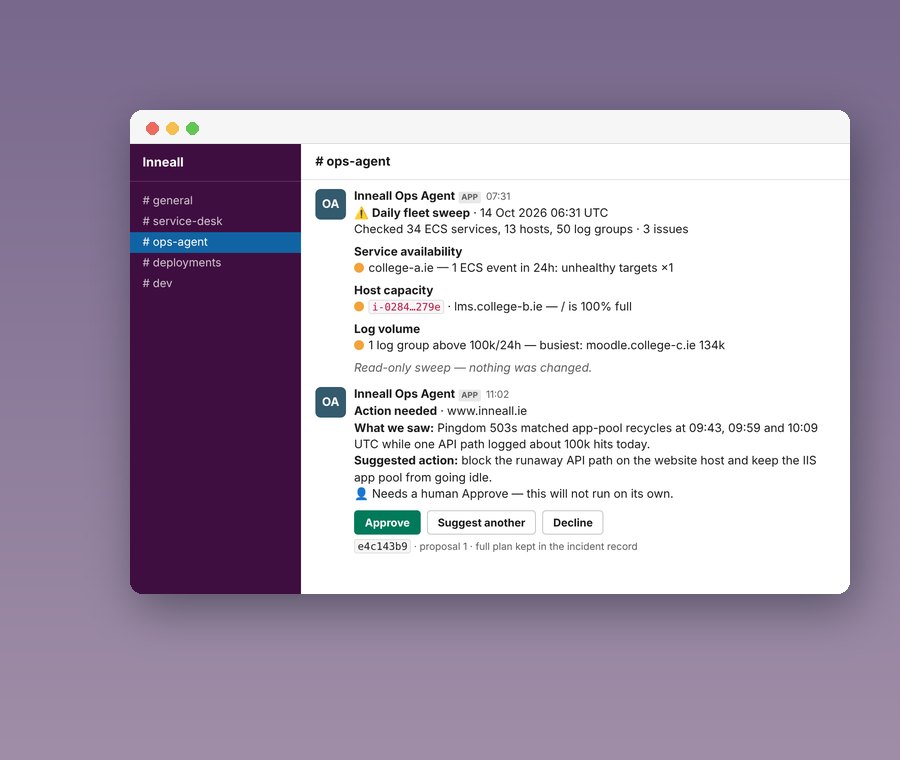
We use AI agents in our own service desk and operations.
Is where most of the work and most of the risk sits, not the model.
The agent has to hand over with the full context.
Because that is the first question a data protection officer asks.
We will publish measured results as we have them, not before.
Assessment, pilot, production
Works with the platforms you are already buying: OpenAI, Anthropic, Microsoft, Salesforce Agentforce.
Three or four systems, one group of users, with logging and evaluation built in.
Logging and evaluation built inIdentity, permissions, audit, monitoring and vendor choice.
Governed and monitoredWe run it, measure it and keep it within your policy.
Within your policyStart here
A few days with IT and student services, fixed price.
What you leave with
Proof
The agents behind our own service desk and operations.
“Inneall are very solutions driven. They find better ways of doing things. I can throw an idea at them and they’ll find a way to do it.”
We know Moodle, Salesforce, Zoho, Sitefinity and Celcat well because they have proven themselves in colleges. We are not tied to any vendor. We start from what you need and what you already have, and we will tell you plainly if an existing platform is the right answer.
Yes. Before we configure or build anything we sit with the people who do the work and map how it actually happens, not how the process document says it happens. We find the duplication and the friction, then design the workflow the technology will support. Better systems on broken processes do not give better outcomes.
Sometimes, rarely entirely. Established platforms are proven, maintainable and cost effective, but colleges have processes, compliance requirements and integrations that generic software does not cover out of the box. We use the platform where it fits and build the missing pieces where it does not, then connect everything so it works as one system.
A focused integration or workflow automation can be live in weeks. A full programme across recruitment, student records, learning and reporting usually runs six to twelve months. Every project is broken into short phases so you see working software early and can change direction while it is still cheap to do so.
Systems we host run in AWS in Ireland, with backups, monitoring and access controls in place, and we can also run inside your own AWS or Azure account. We sign a data processing agreement with every client. We are working towards ISO/IEC 27001 certification and can share our security practices on request.
Next step
Start with a fixed-price AI Readiness Assessment, and one pilot with a scope and a cost.
Integrators for specialised education and CRM platforms
Connected to your systems,
within your permissions
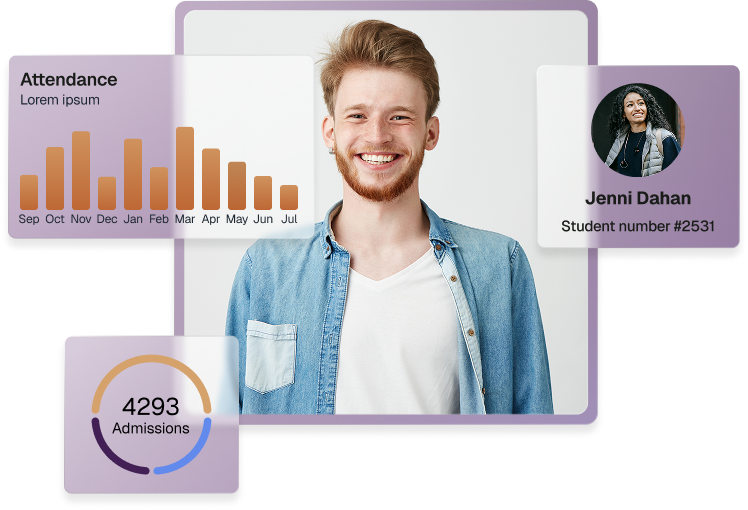
A few days with IT and student services, fixed price.
A chatbot with a knowledge base can explain the fee policy. It cannot tell a student what they owe, when their next class is, or whether yesterday's request has been picked up, because it has no governed way to reach the systems that know.

Small steps, each with something to show for it.
We use AI agents in our own service desk and operations. Three things carry over.

A student asks what they need to do this week and gets one answer drawn from four systems.
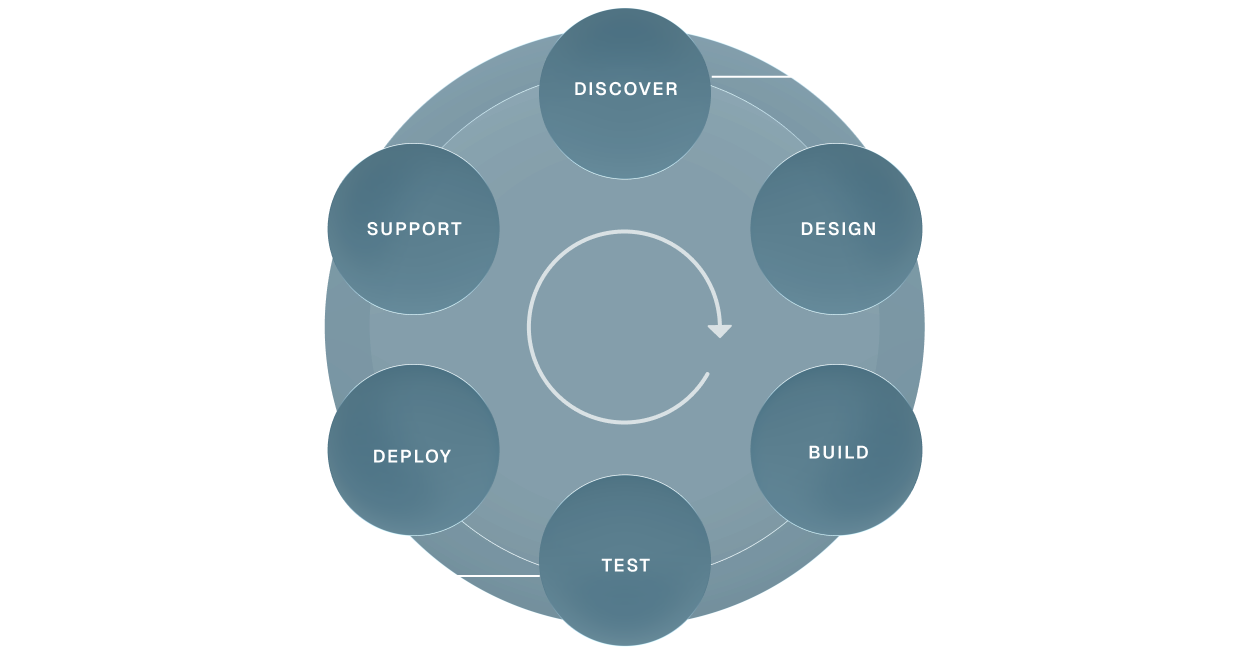
Partnership, transparency, user-centred design and long-term quality guide every project. Each one runs through the same six stages, so you always know where it stands and who is accountable.
We love API environments
and the challenge of integration
We’ve integrated systems others refused to touch!
“Inneall’s impact on our ability to deliver reliable, scalable technology has been absolutely enormous. What sets them apart is their deep knowledge of our business, they understand our systems, our teams, and our priorities. That means we’re not dealing with a technology supplier; we’re working with a partner who genuinely cares about getting it right.”
Edward Ormonde
Head of IT, Dublin Business School